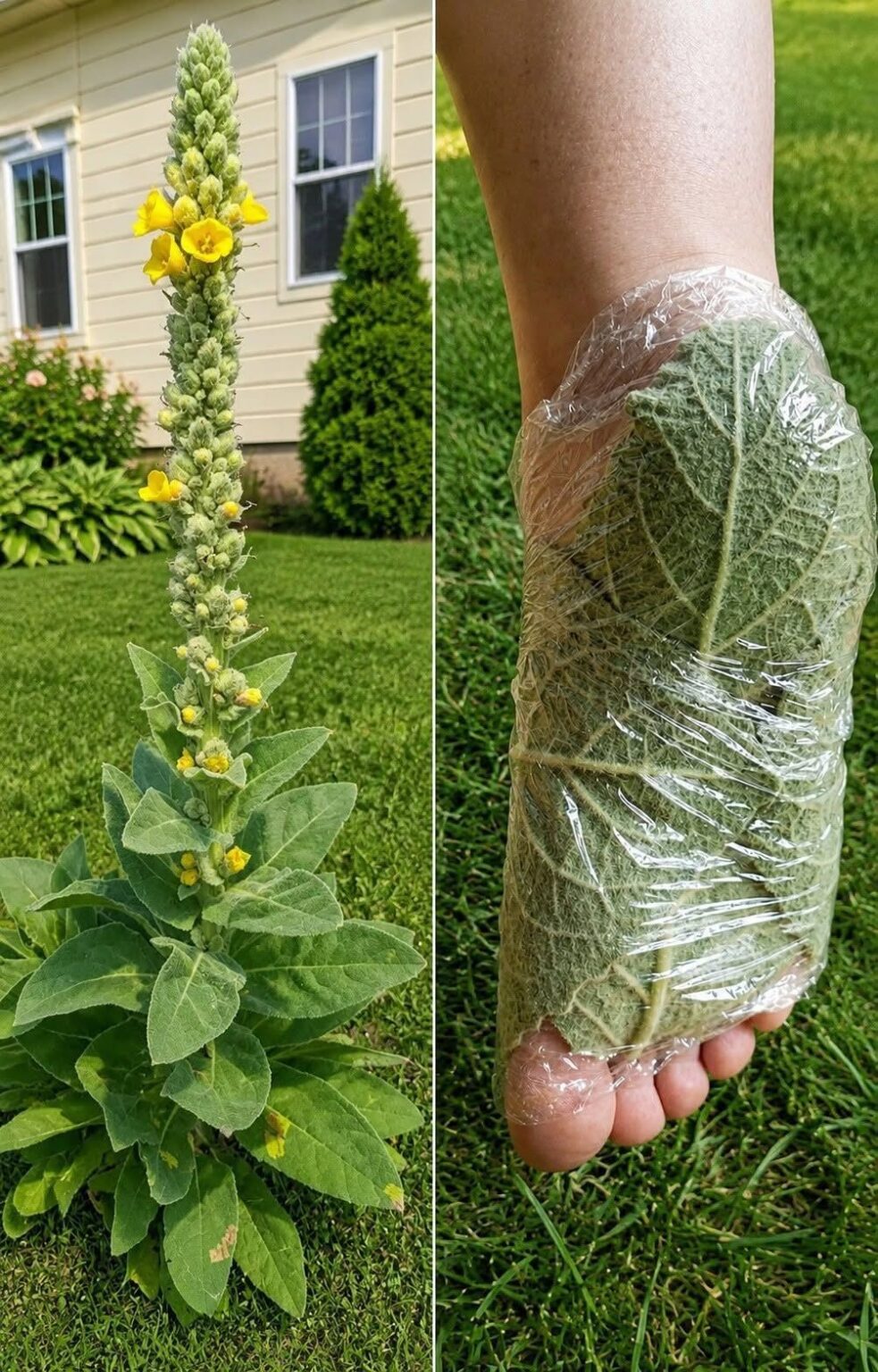
Have you ever walked past a common wild plant without realizing it has been valued in traditional herbal practices for centuries? The plant shown in the image to be mullein (Verbascum thapsus), a tall flowering herb recognized by its soft, fuzzy leaves and bright yellow flowers.
Many people consider mullein a weed because it grows easily along roadsides, fields, gardens, and vacant lots. However, herbal enthusiasts have long appreciated this plant for its traditional uses and unique characteristics.
Let’s explore why mullein has attracted so much attention over the years.
What Is Mullein?
Mullein is a biennial plant native to Europe, Asia, and North Africa but now found throughout many parts of the world.
During its first year, it develops a rosette of large, velvety leaves close to the ground.
In the second year, it sends up a tall flowering stalk that can reach several feet in height and produces numerous yellow blossoms.
Its soft leaves are one of its most recognizable features.
Why Is Mullein So Popular?
For generations, mullein has been used in traditional herbal preparations.
People have historically prepared:
- Herbal teas
- Infusions
- Compresses
- Oils
- Steam preparations
Its popularity stems from its long history in folk medicine rather than from proven medical claims.
The Viral Leaf-on-the-Foot Trend
Social media often shows mullein leaves wrapped around the feet using plastic wrap, claiming that the plant can “pull toxins” from the body overnight.
Currently, there is no scientific evidence showing that placing mullein leaves on the feet removes toxins from the body.
The body naturally removes waste through:
- The liver
- The kidneys
- The digestive system
- The lungs
No plant wrap has been proven to replace these normal biological functions.
Traditional Herbal Tea Preparation