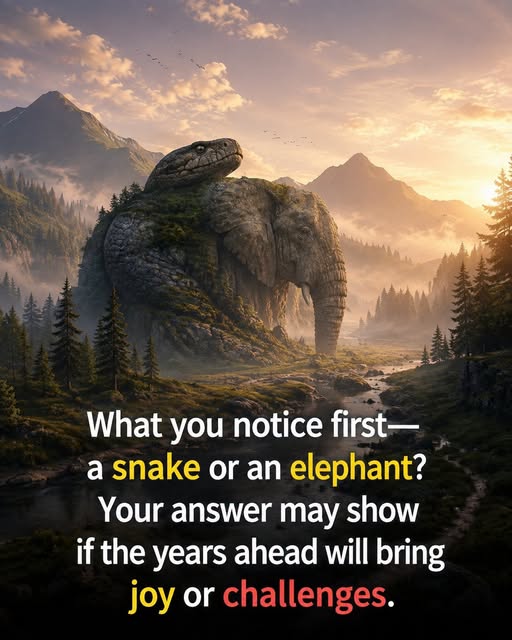
Your Brain May Even Change Its Answer
Here’s another fascinating part.
After someone tells you where the second animal is, you may suddenly see it too.
Once your brain recognizes the alternative interpretation, it becomes much easier to switch between the two images.
This is one of the reasons ambiguous optical illusions can be so addictive. Your perception isn’t permanently locked into one answer.
You can look at the same picture several times and notice something different each time.
The Fun Part: Test Your Friends
Show the image to someone without explaining what they’re supposed to find.
Ask them one simple question:
“What do you see first?”
Don’t give them any clues.
Then compare their answer with yours.
You might be surprised to discover that people sitting next to you can interpret the same shapes completely differently.
And if you initially saw one animal but suddenly noticed the other, you’re experiencing exactly what makes optical illusions so fascinating.
Final Thought
Whether you see a snake or an elephant, your answer doesn’t determine your personality or predict what will happen in your future.
But it does demonstrate something genuinely interesting about human perception: our brains can interpret the same visual information in remarkably different ways.
So take another look.
Snake or elephant—which one did you see first?