Stiffness After Inactivity
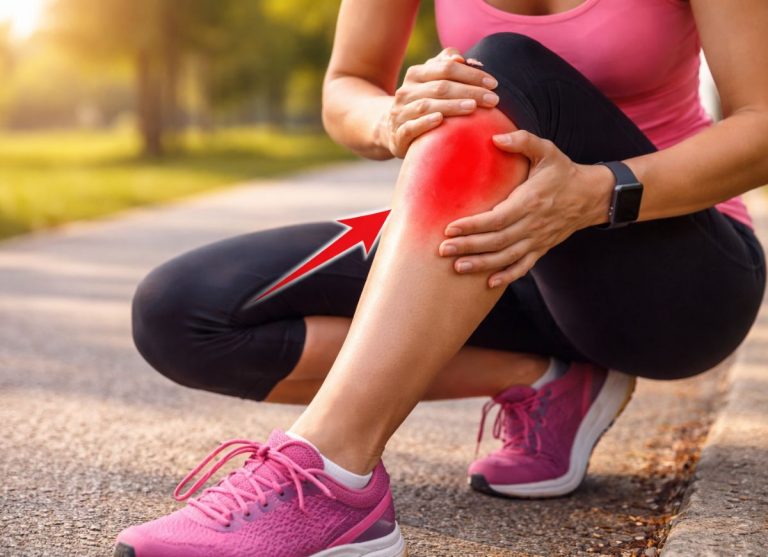
After a provocative activity is completed, or even after prolonged periods of sitting (like at a desk or in a car), the affected knee and hip area can feel achy and stiff. This is a common feature of many inflammatory conditions.
The stiffness tends to be most noticeable upon standing up after being seated or first thing in the morning. It typically eases after a few minutes of gentle movement but serves as a reminder of the underlying inflammation and tissue irritation.
What Causes Iliotibial Band Syndrome to Develop?
The development of Iliotibial Band Syndrome is typically caused by a combination of three main categories of factors: specific training errors, individual anatomical predispositions, and underlying muscular imbalances.
It is rarely the result of a single acute event but rather the cumulative effect of repetitive micro-trauma. The syndrome emerges when the demand placed on the iliotibial band exceeds its capacity to handle the load, leading to friction, irritation, and inflammation, most commonly at the lateral aspect of the knee.
Common Training Errors Leading to ITBS
Common training errors that lead to ITBS are typically related to doing too much, too soon, or too fast, which overloads the iliotibial band before it can adapt. These mistakes disrupt the body’s natural recovery cycle and place excessive, repetitive strain on the tissues of the outer thigh and knee.
The most prevalent errors include a rapid increase in training volume or intensity, inadequate warm-ups or cool-downs, excessive downhill running, and consistently running on banked or uneven surfaces.
One of the most frequent culprits is a sudden jump in running distance or speed. A runner who increases their weekly mileage from 10 miles to 20 miles without a gradual build-up does not give their connective tissues, including the Iliotibial Band Syndrome, enough time to adapt to the increased load. This too much, too soon approach is a classic recipe for overuse injuries.
Also, failing to properly warm up before a workout means the muscles and fascia are less pliable and prepared for the demands of the activity. A proper dynamic warm-up increases blood flow and tissue elasticity, allowing the IT band to glide more smoothly. Skipping this step can lead to increased friction and strain from the very first stride.
Running downhill places unique stresses on the lower body. It forces the quadriceps to work eccentrically (lengthening while under tension) to brake the body’s momentum. It also requires the knee to be slightly flexed for a longer duration during the stance phase, which increases the time the IT band is under tension and rubbing against the lateral femoral epicondyle, significantly heightening the risk of irritation.
Furthermore, consistently running on the same side of a cambered road or a banked indoor track causes the outside foot to be lower than the inside foot. This creates a functional leg-length discrepancy and causes the pelvis to tilt, increasing tension on the Iliotibial Band Syndrome of the higher leg as it works harder to maintain stability. Alternating directions can help mitigate this risk.