IT Band Syndrome and Patellofemoral Pain Syndrome (Runner’s Knee)
Although both Iliotibial Band Syndrome (ITBS) and Patellofemoral Pain Syndrome (PFPS) are common overuse injuries in runners and athletes, they are distinct conditions with different locations of pain and underlying causes.
The most significant differentiator is the location of the pain. ITBS characteristically causes sharp, localized pain on the lateral (outer) side of the knee, precisely over the lateral femoral epicondyle. This pain often worsens during repetitive knee bending activities, like running downhill or descending stairs.
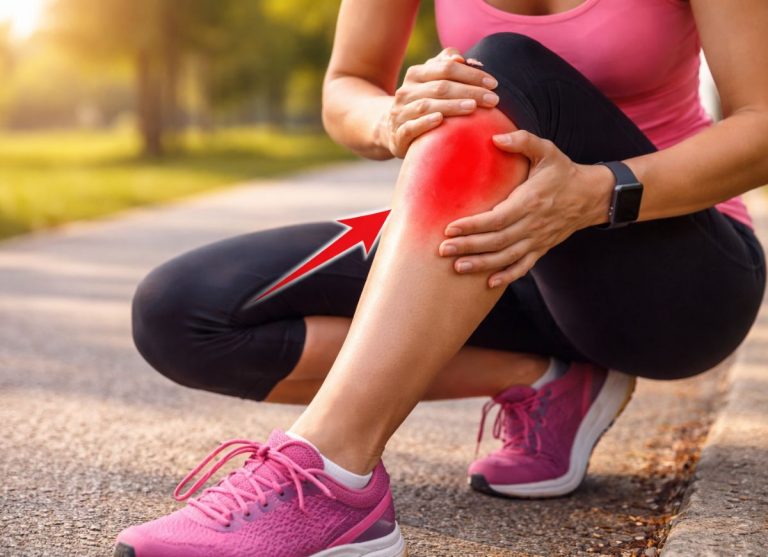
In contrast, PFPS, often referred to as runner’s knee, presents as a dull, aching pain felt at the anterior (front) of the knee, typically around, behind, or under the patella (kneecap). PFPS pain is often aggravated by activities that load the patellofemoral joint, such as squatting, kneeling, going up or down stairs, and prolonged sitting with the knees bent (the moviegoer’s sign).
The underlying biomechanics also differ significantly. ITBS is primarily considered a friction or compression syndrome where the dense Iliotibial Band Syndrome repeatedly rubs against the lateral femoral epicondyle, leading to inflammation and pain. This is commonly attributed to poor pelvic stability resulting from weak hip abductor muscles, particularly the gluteus medius.
This weakness can cause the hip to drop and the femur to rotate inward during running, increasing tension on the Iliotibial Band Syndrome. PFPS, on the other hand, is generally a problem of poor patellar tracking.
The patella is supposed to glide smoothly within a groove on the femur (the trochlear groove). In PFPS, muscle imbalances or alignment issues cause the patella to track improperly, often laterally, leading to irritation of the cartilage underneath it.
The key differences in their etiology dictate their respective treatment and rehabilitation strategies, highlighting why an accurate diagnosis is crucial.
ITBS treatment is primarily centered on strengthening the hip abductors and core to improve biomechanical control of the leg, along with stretching the hip flexors and TFL muscle.
PFPS treatment often involves strengthening the vastus medialis obliquus (VMO), the innermost quadriceps muscle, to help correct patellar tracking, alongside stretching tight structures on the outside of the thigh, such as the IT band and lateral quadriceps.