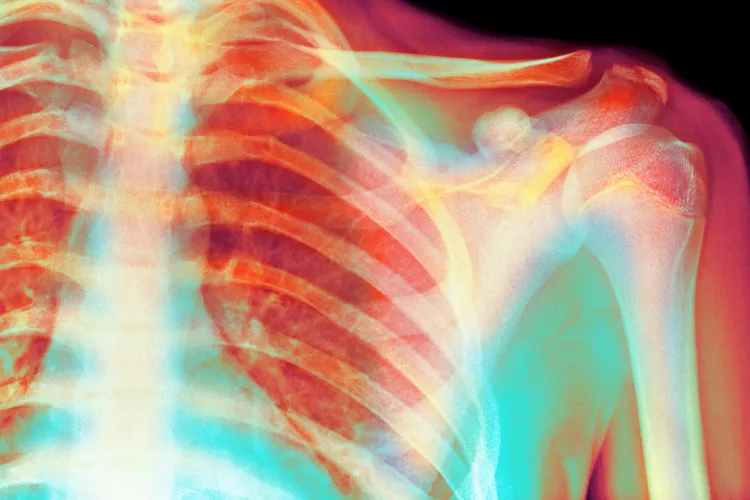
- Why we’re talking about this: Despite the growing popularity of body scans like DEXA, most younger women don’t benefit from routine screening unless they have certain risk factors.
- What to do: Talk to your healthcare provider about earlier screening if you have osteoporosis risk factors. Otherwise, focus on habits that keep bones strong throughout life.
- Looking ahead: Knowing when a bone density scan is—and isn’t—appropriate can help you focus on the prevention strategies that matter most for lifelong bone health.
Routine osteoporosis generally begins at age 65 for women.1 But some women get screened earlier—including the Kardashians.
On a recent episode of the Good Hang podcast, Kim Kardashian said she and her sisters, who range from their late twenties to late forties, receive bone density scans, called DEXA scans, every year. Not only that—a provider brings the device to them.
Most women don’t actually benefit from DEXA scans prior to their 60s. But experts say there are a few exceptions.
First, When Do Women Start Losing Bone Density?
According to Rachel Pessah-Pollack, MD, an endocrinologist at NYU Langone, women reach peak bone mass by their late 20s. Some people with osteoporosis risk factors, such as a family history of the disease or low body mass index, may begin losing density around that time. But for most women, bone density remains stable until late perimenopause, the transitional period before menopause that typically hits in the mid-40s.
At that time, bone density begins to drop rapidly, largely because of falling estrogen levels, Pessah-Pollack explained. Bone loss accelerates most sharply one to two years after the final menstrual period, typically between the ages of 45 and 55, and then continues at a slower rate.2
Other factors can contribute to bone loss throughout life, according to Deborah Sellmeyer, MD, a clinical professor of medicine at Stanford University who specializes in metabolic bone disease. These factors include medications such as steroids, poor nutrition, malabsorption, and age-related changes like altered calcium and vitamin D metabolism, muscle loss, and declining kidney function.