How Do DEXA Scans Work?
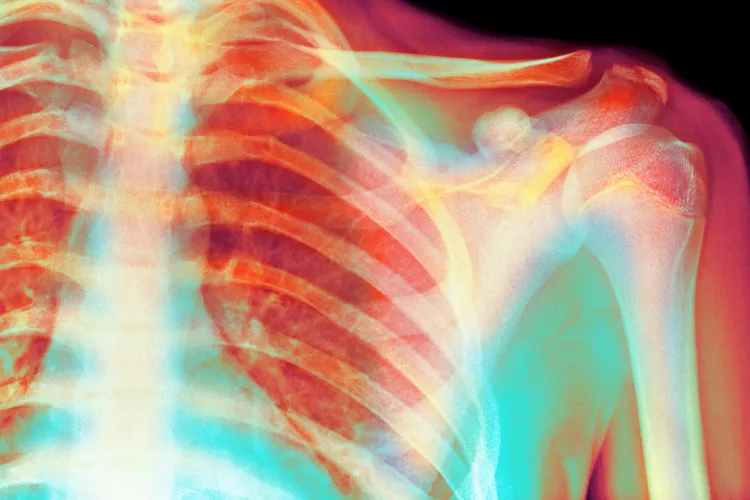
DEXA, short for dual-energy X-ray absorptiometry, is a quick, painless scan that uses low-dose X-rays to measure bone density. It works by assessing the amount of calcium and other minerals in bones—typically in the spine and hip, and sometimes in the forearm if either of those sites is not usable—and translating that information into a score, Sellmeyer explained.
Results include a T-score, which compares your bone density with that of a healthy young adult, and a Z-score, which compares bone density among people of the same age and sex, according to the Centers for Disease Control and Prevention.3 The T-score is used to diagnose osteoporosis and osteopenia (an early sign of osteoporosis) in postmenopausal women and men over 50, while the Z-score is more commonly used for premenopausal women and men younger than 50, Sellmeyer said.4
The U.S. Preventive Services Task Force recommends that all women at average risk for osteoporosis receive a DEXA scan beginning at age 65, with earlier screening for those at higher risk.1
Are There Benefits to Getting a DEXA Scan Before Age 65?
According to Stellmeyer, it’s not usually helpful for women to receive a bone density scan before menopause, technically defined as 12 consecutive months without a period. Younger women have a very low fracture risk, she said, so measuring bone density typically isn’t useful unless there are indications of skeletal fragility, such as using medications like prednisone or estrogen suppressors or having a history of low-impact fractures, an eating disorder, irregular periods, or celiac disease.
However, Stellmeyer said that routine DEXA scans during late perimenopause or shortly after menopause could be helpful as a way to catch low bone density earlier and potentially prevent fractures. That said, there’s a lack of large-scale studies with long-term follow-up demonstrating that this approach improves outcomes, she added.
Cost is also a consideration. Insurance typically won’t cover bone scans before age 65 unless a health care provider determines that a patient is a candidate for one, Pessah-Pollack noted. In those cases, a letter of medical necessity may be needed. Without insurance coverage, DEXA scans can cost up to a few hundred dollars.
But even if younger, low-risk women are willing to pay for a scan, that doesn’t mean it will be helpful for them, Stellmeyer said. “Knowing the result may offer no benefit, only create stress, and potentially lead to inappropriate treatment that would not be able to further reduce the young woman’s already low fracture risk,” she said.