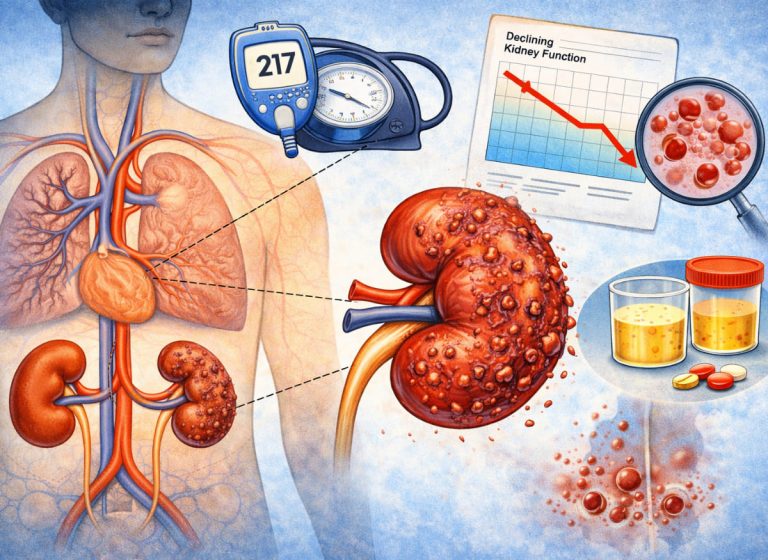
Advanced Aspects of Diagnosing and Living with Kidney Disease
Chronic Kidney Disease (CKD) is a complex condition that requires careful and continuous management to slow its progression and preserve kidney function for as long as possible. Advanced aspects of managing CKD not only involve sophisticated diagnostic techniques but also focus on making critical lifestyle adjustments, adhering to specific dietary modifications, and, when necessary, transitioning to treatments like dialysis or kidney transplantation. Furthermore, a deep understanding of the diagnostic tools and long-term management strategies can help patients and caregivers make informed decisions as they navigate this long-term condition.
How is Chronic Kidney Disease Officially Diagnosed?
Chronic Kidney Disease (CKD) is officially diagnosed through a combination of laboratory tests and imaging, focusing on kidney function and structural abnormalities. Early stages of CKD often go unnoticed due to a lack of symptoms, making these tests essential for detection and monitoring.
- Glomerular Filtration Rate (GFR): The Glomerular Filtration Rate (GFR) is the gold standard test to assess kidney function. This blood test measures the creatinine levels in the blood, which is a waste product produced by muscles. Based on this, the GFR estimates how efficiently the kidneys are filtering waste. A GFR above 90 mL/min/1.73m² is considered normal, but a GFR below 60 for three months or more is indicative of kidney disease and helps categorize the severity of CKD into five stages, from mild (Stage 1) to kidney failure (Stage 5).
- Albumin-to-Creatinine Ratio (ACR): The albumin-to-creatinine ratio (ACR) test is used to check for albumin, a type of protein that should not be present in large amounts in urine. A high ACR (above 30 mg/g) is a strong indicator of kidney damage and is often one of the first signs of CKD. Persistent albuminuria, especially with a low GFR, confirms CKD.
- Imaging and Biopsy: Imaging tests such as ultrasound, CT scans, or MRIs can be performed to check for structural abnormalities in the kidneys, such as blockages, cysts, or changes in kidney size. A kidney biopsy, which involves taking a small sample of kidney tissue for analysis, may be needed to identify the underlying cause of kidney damage and determine the best course of action for treatment.
Recent Articles