
F. Hygiene Maintenance
-
Personal Hygiene:
-
Daily sponge bath to prevent infections.
-
Maintain oral hygiene (brushing, mouth rinse).
-
-
Bed Hygiene:
-
Change bedsheets regularly, especially if sweating excessively. Clean linen prevents infections and provides comfort.
-
G. Psychological Support
-
Emotional Care:
-
Patients often feel anxious and depressed. Family and healthcare providers should provide emotional support and reassurance.
-
Maintaining a positive environment aids recovery.
-
-
Counseling:
-
Explain the disease, treatment duration, and expected recovery time to the patient and family to reduce anxiety.
-
Patient Education
Education is an important component of prevention and proper management.
A. Disease Awareness
Understanding Malaria The patient should understand what malaria is, how it spreads, and why it can be serious. Misconceptions should be cleared.
-
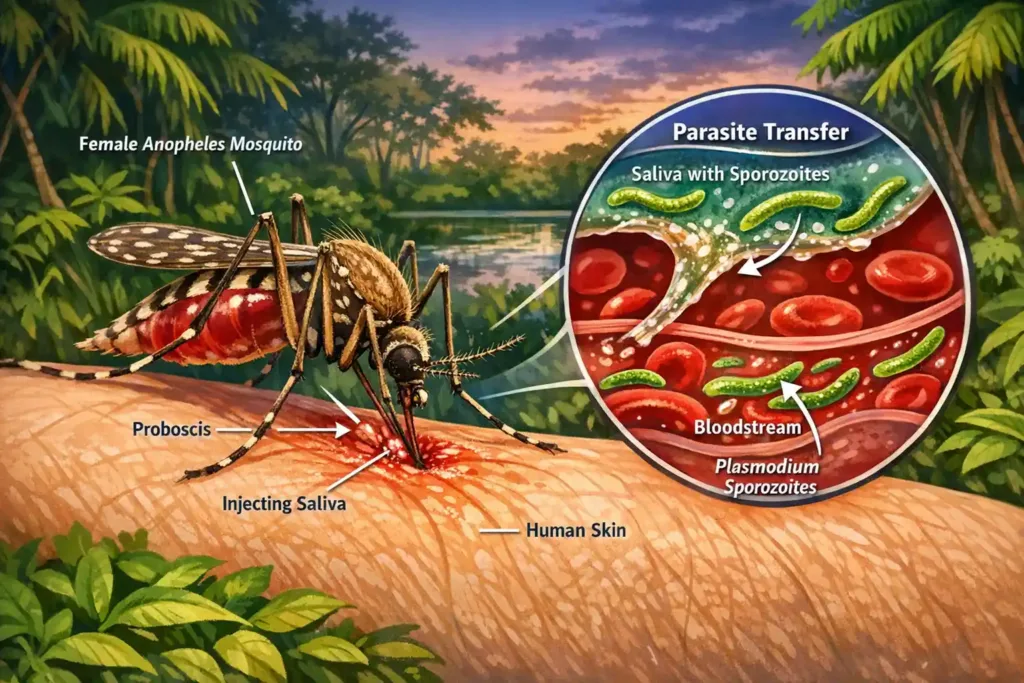
It is important to clarify that malaria is not contagious—it does not spread directly from one person to another. It only spreads through a mosquito bite.
Recognizing Symptoms The patient and family should be taught to recognize typical malaria symptoms so that early detection is possible in the future. Warning signs should also be explained.
B. When to Seek Medical Help
Patients should be given clear instructions on when to go to the hospital immediately:
-
High fever (>103°F) that is not controlled by medicines.
-
Severe headache and confusion.
-
Repeated vomiting.
-
Difficulty breathing.
-
Seizures.
-
Unconsciousness.
-
Dark urine or no urine.
-
Severe weakness.
There should be no delay in these situations.
C. Medication Compliance
Complete Course The patient should understand that it is very important to complete the full course of medicine, even if symptoms improve. Incomplete treatment can lead to recurrence and resistance.
Timing and Dosage The importance of proper timing and dosage should be explained. How to compensate for missed doses should also be explained.
Side Effects Inform about common side effects so that the patient does not panic. But also alert them about serious adverse effects that require medical attention.
D. Prevention Tips for Future
Avoiding Mosquito Bites Patients should be taught prevention measures for the future:
-
Using bed nets.
-
Applying repellents.
-
Wearing protective clothing.
-
Eliminating breeding sites.
Environmental Cleanliness The importance of keeping one’s surroundings clean should be explained. Avoid stagnant water.
Travel Precautions If traveling to an endemic area, chemoprophylaxis should be considered (with doctor’s advice).
Regular Check-ups High-risk individuals (pregnant women, children) should get regular check-ups, especially those living in endemic areas.
E. Community Responsibility
The patient should be told that they also have a responsibility to their community.
-
If they have malaria, they should avoid mosquito bites so that the infection does not spread to others via mosquitoes.
-
Participate in community programs—cleanup drives, awareness campaigns, etc.
Recent Articles

You won’t be fooled again after seeing this

News If a Woman Has Small Breasts, Does It Really Mean Anything About Her Personality or Body? Experts Break Down Common Myths, Social Stereotypes, Biological Facts, and Misconceptions, Revealing Why Body Features Do Not Define Character, Confidence, Health, or Worth, Challenging Outdated Beliefs and Encouraging a More Realistic, Respectful Understanding of Natural Human Diversity and individual differences

Massive python with swollen belly found under family’s shed — X-ray reveals its last meal

THE FIRST ANIMAL YOU NOTICE MAY REVEAL SOMETHING SURPRISING ABOUT YOUR THINKING STYLE

