
FAQs
What causes malaria?
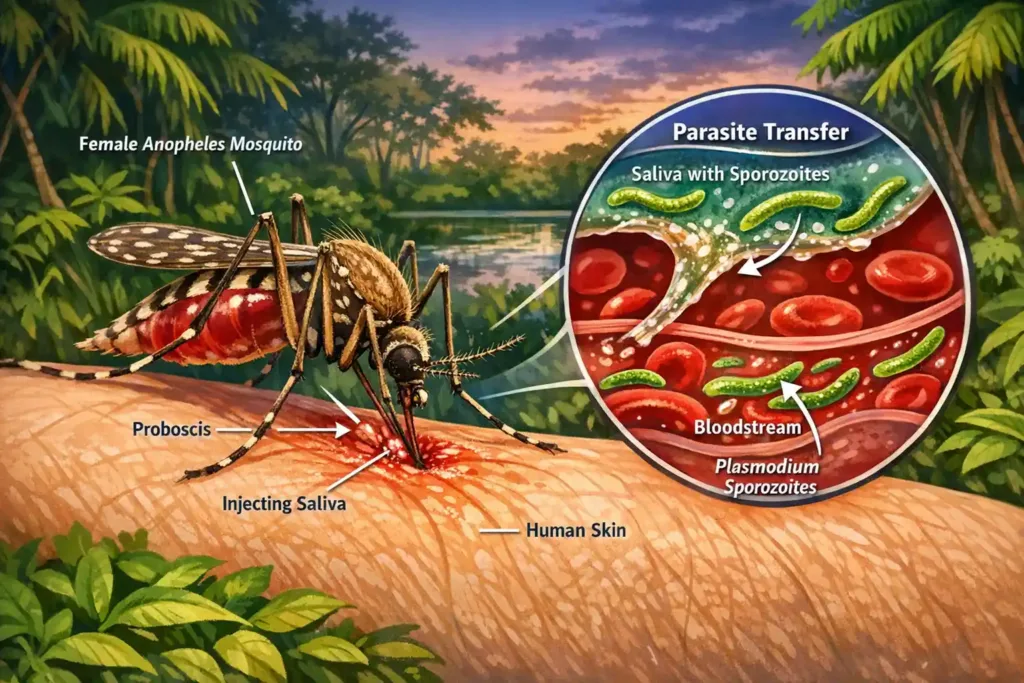
Malaria is caused by a protozoan parasite of the genus Plasmodium. It is transmitted to humans through the bite of an infected female Anopheles mosquito.
Which organ is affected in malaria?
The parasite primarily infects the liver (initial stage) and red blood cells (blood stage). In severe cases, it can cause dysfunction in the spleen, brain (cerebral malaria), and kidneys.
What are the 4 types of malaria?
The four main species of Plasmodium that infect humans are:
- Plasmodium falciparum (most severe and deadly)
- Plasmodium vivax (most widespread)
- Plasmodium malariae
- Plasmodium ovale (Note: A fifth species, P. knowlesi, is also known to infect humans)
Can malaria spread from person to person?
No, malaria is not contagious. It cannot spread directly from person to person like a cold or the flu (via coughing or sneezing). It is spread primarily by mosquito bites, though rare transmission can occur via blood transfusion, organ transplant, or from mother to child during childbirth.