Step 3 – Sexual Forms:
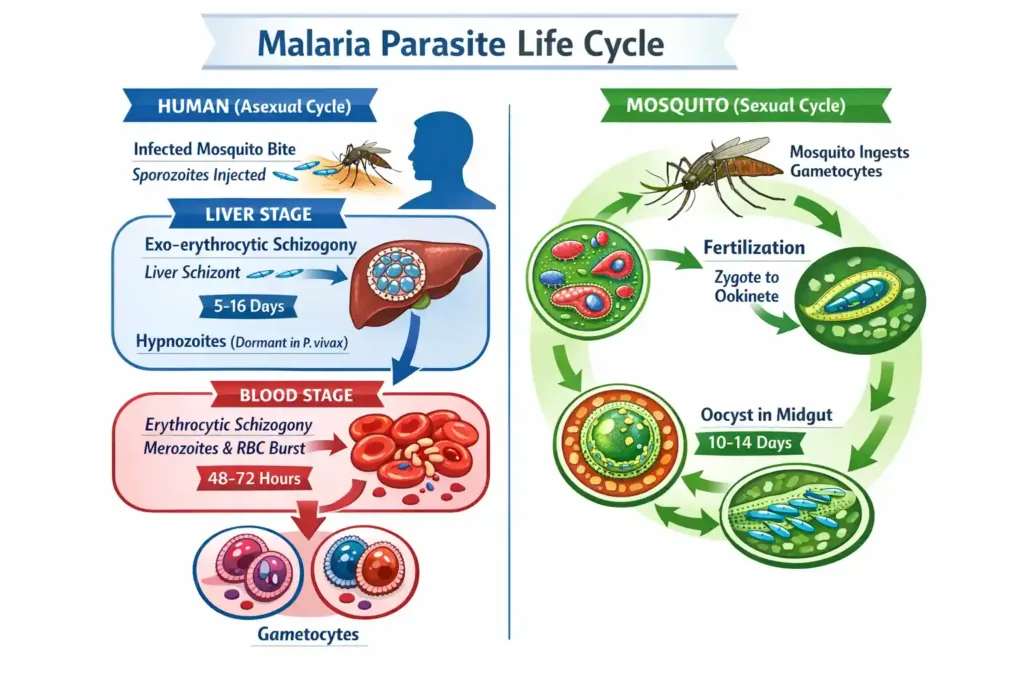
- Some merozoites turn into male and female gametocytes.
- These are the sexual forms that mature inside the mosquito.
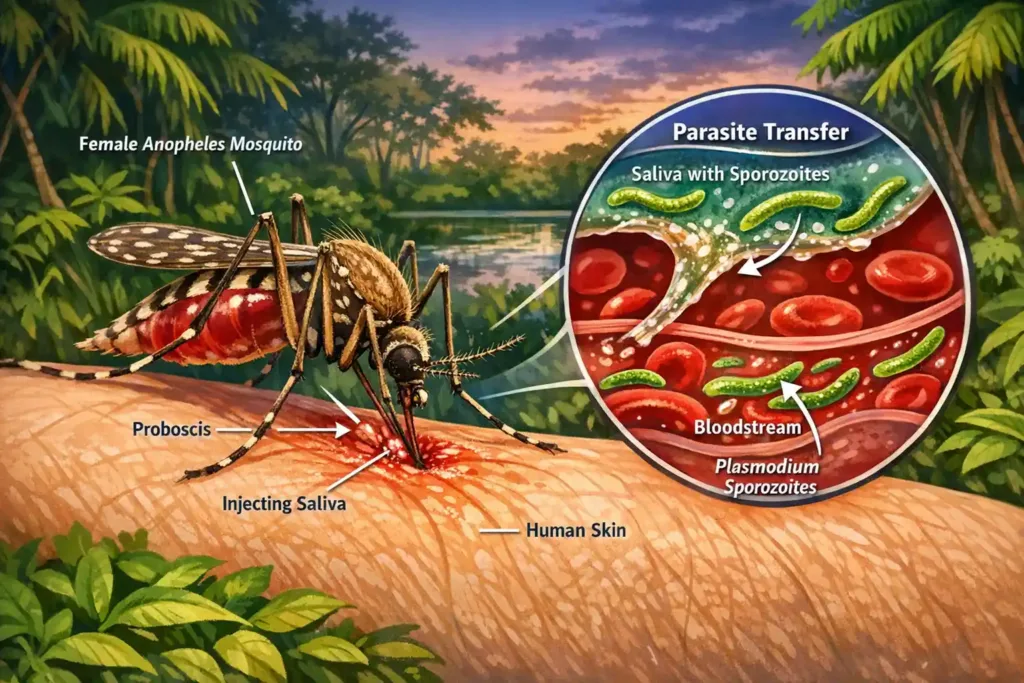
- When a mosquito bites such an infected person, these gametocytes enter the mosquito.
In the Mosquito Body (Sexual Cycle):
-
In the mosquito’s stomach, male and female gametocytes meet and fertilization occurs.
-
This forms an ookinete, which penetrates the mosquito’s gut wall and becomes an oocyst.
-
The oocyst matures and produces thousands of sporozoites.
-
These sporozoites travel to the mosquito’s salivary glands.
-
Now, when this mosquito bites a healthy person, the cycle will start again.
Pathophysiology
RBC Destruction and Anaemia
When RBCs burst, there is a lack of healthy red blood cells in the body. This causes anaemia to develop. The patient feels weakness, fatigue, and paleness.
- In P. falciparum, infected RBCs become sticky and block small blood vessels. This prevents oxygen from reaching the organs, which can lead to serious complications.
Immune Response:
The body’s immune system detects the parasites and releases cytokines. These cytokines cause fever, chills, and inflammation. Inflammatory mediators such as TNF-alpha and interleukins increase.
Spleen and Liver Enlargement:
The spleen’s job is to remove damaged RBCs. In malaria, there are so many infected RBCs that the spleen overworks and becomes enlarged (splenomegaly). The liver can also become enlarged (hepatomegaly).
Metabolic Changes:
- Parasites consume glucose, which can lead to hypoglycaemia in the patient.
- Lactic acid build-up can cause acidosis, which is life-threatening in severe cases.
Mechanism of Complications:
- In P. falciparum, infected RBCs block the small blood vessels in the brain, causing cerebral malaria, which can lead to seizures and coma.
- Kidney failure, liver dysfunction, and pulmonary edema can also occur.
It is important to understand that malaria is not just a simple fever. It is a complex disease in which multiple body systems are affected. Therefore, timely diagnosis and proper treatment are very necessary.
Recent Articles

You won’t be fooled again after seeing this
News If a Woman Has Small Breasts, Does It Really Mean Anything About Her Personality or Body? Experts Break Down Common Myths, Social Stereotypes, Biological Facts, and Misconceptions, Revealing Why Body Features Do Not Define Character, Confidence, Health, or Worth, Challenging Outdated Beliefs and Encouraging a More Realistic, Respectful Understanding of Natural Human Diversity and individual differences

Massive python with swollen belly found under family’s shed — X-ray reveals its last meal