
What is Malaria?
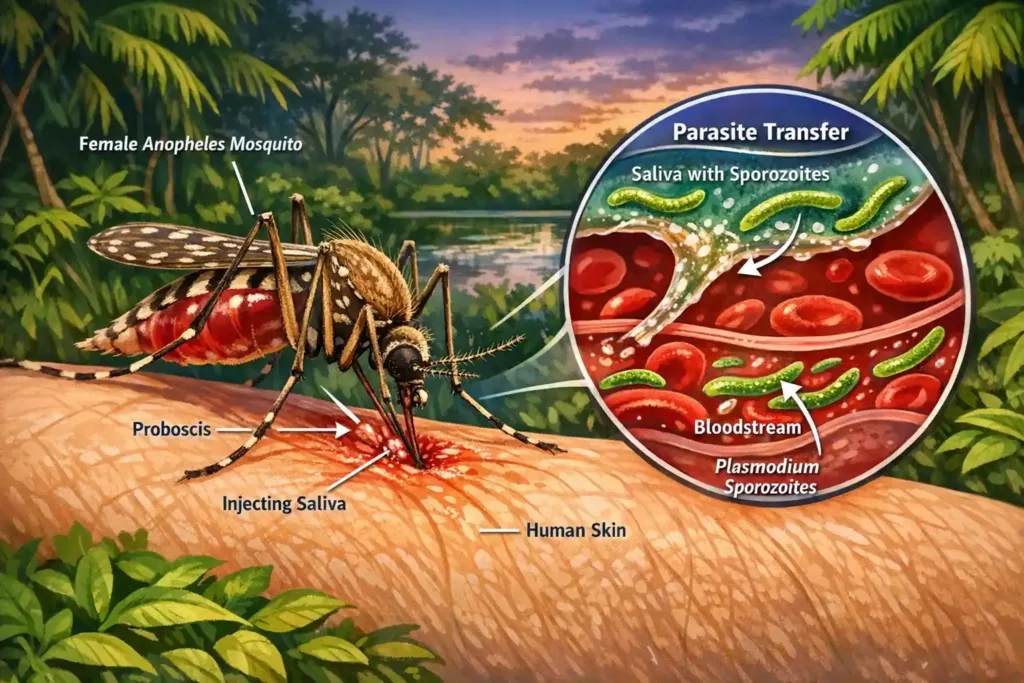
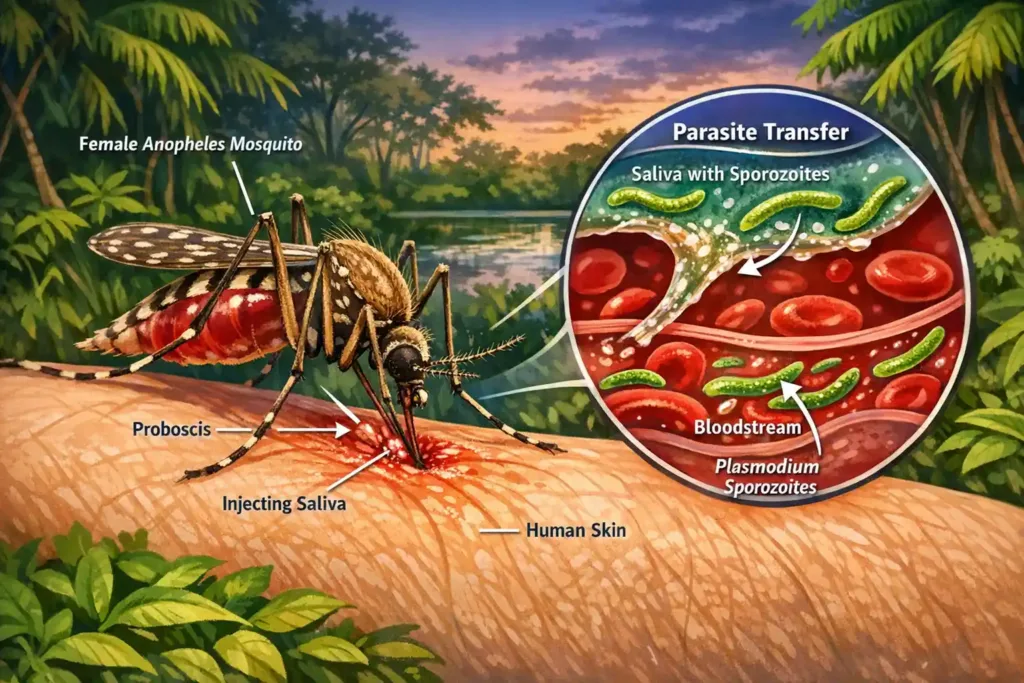
Malaria is a life-threatening infectious disease caused by a parasite called Plasmodium. This parasite is transmitted to humans through the bite of an infected female Anopheles mosquito. In simple words, when an infected mosquito bites a person, the parasite enters their body and the illness begins.
The name comes from the Italian words “mal aria,” which means “bad air,” because in old times people believed that this disease spread through bad air.
Types of Malaria Parasites
There are five main Plasmodium species that cause malaria:
- Plasmodium falciparum: This is the most dangerous type and is responsible for the maximum number of deaths. If not treated in time, it can cause severe complications like cerebral malaria and multi-organ failure. In India, this species is predominantly found in tribal and forest areas.
- Plasmodium vivax: This is the most common species in India. It is also called “benign tertian malaria.” Although it is less dangerous than falciparum, it has a distinct feature, it can remain in a dormant stage (hypnozoites) in the liver and relapse months later.
- Plasmodium ovale: This species is more common in Africa. Very few cases are found in India. Its behavior is similar to P. vivax, and it can also cause relapse.
- Plasmodium malariae: This is relatively rare, but its infection can become chronic. It is called “quartan malaria” because the fever recurs every 72 hours. It can lead to kidney problems if left untreated for a long time.
- Plasmodium knowlesi: This is primarily found in Southeast Asia and is transmitted from monkeys to humans. It multiplies rapidly and can cause severe infection.
Recent Articles

You won’t be fooled again after seeing this

News If a Woman Has Small Breasts, Does It Really Mean Anything About Her Personality or Body? Experts Break Down Common Myths, Social Stereotypes, Biological Facts, and Misconceptions, Revealing Why Body Features Do Not Define Character, Confidence, Health, or Worth, Challenging Outdated Beliefs and Encouraging a More Realistic, Respectful Understanding of Natural Human Diversity and individual differences

Massive python with swollen belly found under family’s shed — X-ray reveals its last meal
THE FIRST ANIMAL YOU NOTICE MAY REVEAL SOMETHING SURPRISING ABOUT YOUR THINKING STYLE

